
APPLICATIONS / WASTEWATER
Municipal and industrial wastewater sludge handling and conveying
After dewatering, sludge from municipal wastewater or industrial effluent treatment must be collected and transferred to its storage or disposal point.
Sludge handling is a process stage in its own right. Dry solids content, consistency, flow rate and conveying behaviour must be taken into account to ensure consistent transfer and limit material build-up.
Sodimate designs conveying systems adapted to the configuration of each installation, from sludge collection at the outlet of the dewatering equipment through to distribution to one or more discharge points. The solutions can combine different conveyors to provide horizontal or inclined conveying, elevation and sludge distribution. Shaftless screw conveyors are particularly suitable for transferring dewatered sludge.
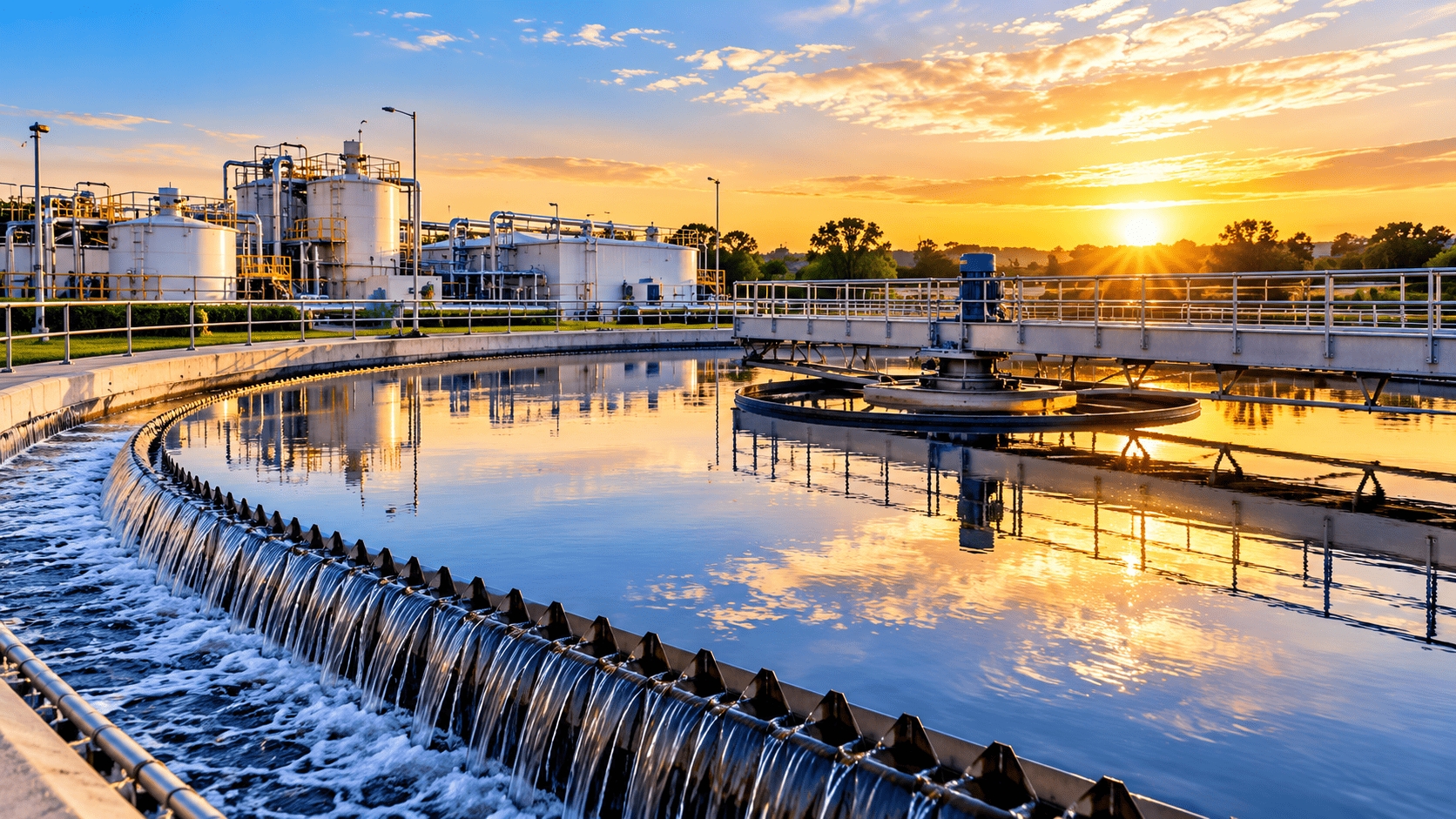
Sludge handling after dewatering
In a municipal wastewater treatment plant or industrial effluent treatment facility, dewatering reduces the water content of sludge to facilitate handling and reduce its volume.
Depending on the installation, this operation may be carried out using a centrifuge, filter press or belt filter. At the outlet of the dewatering equipment, the sludge must be collected without disrupting its operation and then conveyed to its destination.
Depending on the site configuration, the sludge handling route may require several successive operations:
- collection beneath one or more dewatering units;
- horizontal or inclined conveying;
- change of direction;
- elevation to a higher level;
- distribution to several discharge points; and
- discharge into a skip, storage area or towards the disposal point.
The handling system must therefore be considered as a whole to ensure continuity of transfer between sludge production and its destination.
Dewatering
Sludge collection
Horizontal / inclined conveying
Elevation if required
Distribution
Storage / skip / disposal
Sludge with variable characteristics
Dewatered sludge is a difficult material to handle, and its properties can vary significantly depending on its origin, the treatment process and dewatering performance.
Several parameters must be taken into account when defining the conveying system.
Dry solids content
Dry solids content directly influences the consistency and mechanical behaviour of the sludge. Variations in dry solids content can alter its transfer characteristics and adhesion to equipment.
Consistency
Sludge may have a pasty, sticky or more compact consistency. The handling system must be adapted to this behaviour to facilitate its movement.
Flow rate
The sludge flow rate depends on the operation of the installation and may vary during operation. The equipment must be sized to ensure sludge collection and transfer under the various expected operating conditions.
Installation configuration
Transfer distances, changes in elevation, changes of direction, available space and the position of discharge points directly influence the design of the conveying system.
Adapting conveying to the installation configuration
A sludge handling installation can combine several conveyors to follow the required route between the dewatering equipment and the sludge destination point.
Horizontal or inclined conveying
Screw conveyors can collect the sludge and transfer it over the required distances within the installation.
The conveyor geometry, length, inclination and mechanical characteristics are defined according to the sludge properties, the flow rate to be transferred and the site layout.
Sodimate uses shaftless screw conveyors in particular for this purpose. Their design is adapted to the characteristics of the conveyed material and the constraints of each installation.

Elevation using a vertical screw conveyor
When the destination point is at a higher level, the installation may require a sludge elevation solution.
A vertical screw conveyor can overcome a difference in elevation while limiting the installation footprint. It can be integrated between different conveyors to ensure continuity along the sludge handling route.
Its design must take into account the sludge characteristics, the flow rate to be transferred and the elevation height.
Distribution using a pivoting screw conveyor
When sludge needs to be distributed between several discharge points, a pivot-mounted conveyor allows the position of its discharge end to be changed.
This configuration can be used in particular to distribute sludge between several skips or different storage areas.

Equipment used for sludge handling
Sodimate designs custom conveying systems adapted to the sludge characteristics and the configuration of each installation.
Sludge conveyors
Screw conveyors collect and transfer dewatered sludge between the different stages of the installation.
Shaftless screw conveyors allow dewatered sludge to be transferred within a confined system. Their design and liners are adapted to the characteristics of the conveyed material and the constraints of the installation.
Discover the equipment
Vertical screw conveyors
Vertical screw conveyors allow sludge to be elevated when its route requires transfer to a higher level, while limiting the installation footprint.
Pivoting screw conveyors
Pivot-mounted conveyors allow the discharge point to be repositioned in order to distribute sludge to several areas or containers.
Key challenges in sludge handling
The design of a conveying system must take into account both the sludge characteristics and the site's operating constraints.
Sludge variability
Adapt the equipment to variations in dry solids content, consistency and flow rate.
Transfer continuity
Ensure sludge collection and conveying without disrupting the operation of upstream equipment.
Control of material build-up
Limit areas where sludge may accumulate, particularly at changes of direction and interfaces between equipment.
Installation constraints
Adapt the conveying route to distances, changes in elevation, obstacles and available space within the installation.
Containment
Limit material leakage and splashing to help maintain cleanliness in the sludge handling area.
Accessibility and maintenance
Provide access to the equipment for inspection and maintenance.
Frequently asked questions about sludge handling and conveying
Which parameters should be considered when sizing a sludge conveyor?
Sizing depends in particular on the sludge flow rate, dry solids content, consistency, conveying distance, difference in elevation, installation configuration and discharge conditions.
How can dewatered sludge be conveyed?
Sludge can be collected at the outlet of the dewatering equipment and then transferred using conveyors suited to its consistency. Several conveyors can be combined when the route requires changes of direction or elevation.
How can dewatered sludge be elevated?
When sludge needs to reach a higher level, a vertical screw conveyor can be integrated into the handling system to elevate it before transfer continues.
How can sludge be distributed between several skips?
A pivoting screw conveyor can be used to reposition the conveyor discharge point and direct the sludge towards several skips or receiving areas.
Why use a shaftless screw conveyor for sludge conveying?
A shaftless screw conveyor is particularly suitable for transferring pasty and difficult-to-convey materials such as dewatered sludge. The absence of a central shaft in the conveying zone facilitates material flow and limits areas where material may accumulate.
Sludge handling projects
Sodimate solutions are integrated into municipal wastewater treatment plants and industrial effluent treatment facilities to collect, transfer, elevate and distribute sludge after dewatering.
Each project requires the handling system to be adapted to the sludge characteristics, the flow rates to be transferred, the equipment layout and the final sludge destination.
Looking for a solution for sludge handling?
Sludge characteristics and installation configuration may require complex handling routes combining several transfer, elevation or distribution systems.
Sodimate teams support you in assessing the sludge handling route, sizing the equipment and integrating it into your municipal wastewater treatment plant or industrial effluent treatment facility.