APPLICATIONS / DRINKING WATER
Drinking water treatment: processes, reagents and handling solutions
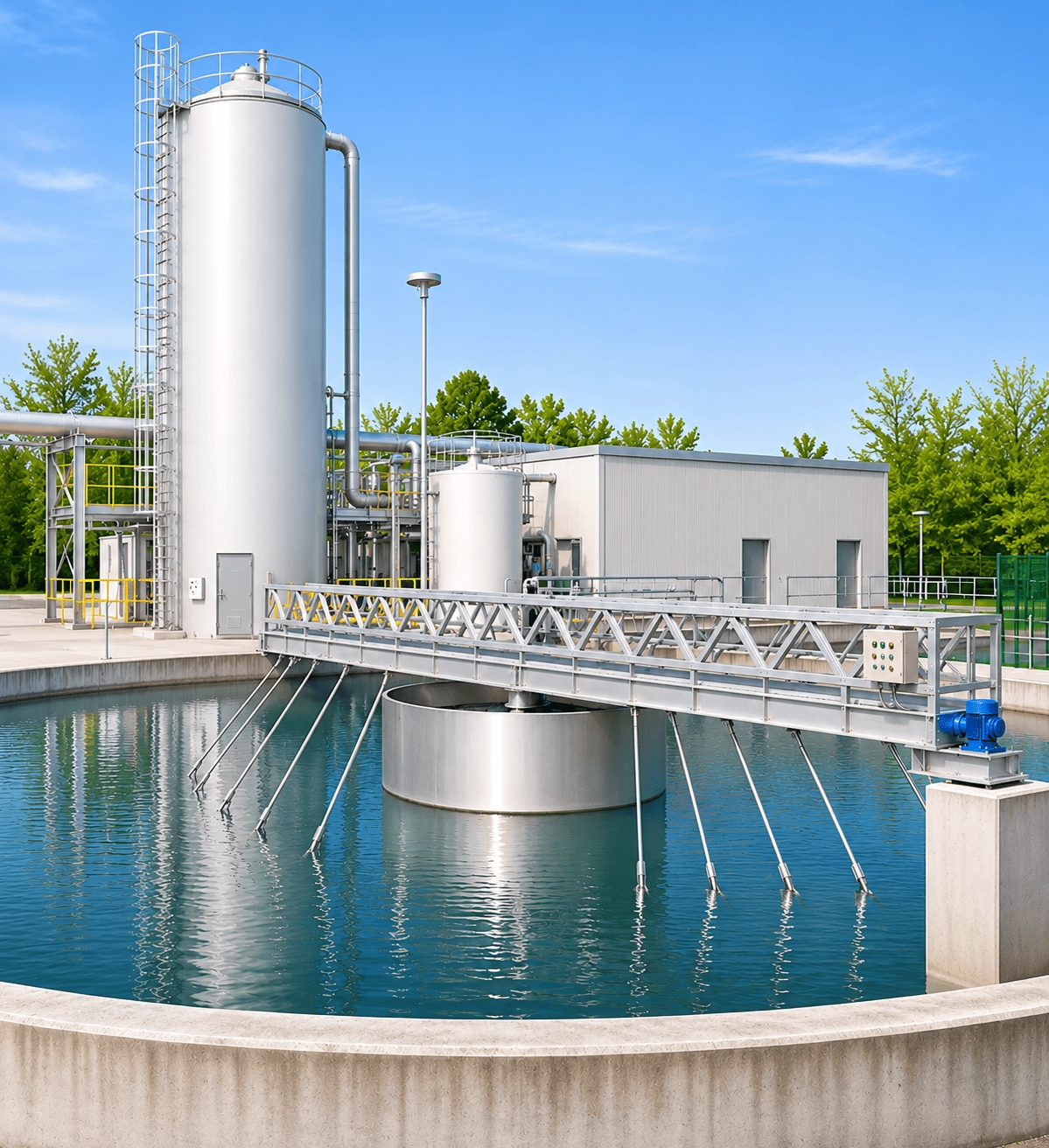
The production of drinking water that meets health requirements relies on a sequence of processes designed to remove suspended solids, adjust the physico-chemical characteristics of the water and ensure the required water quality through to distribution.
Sodimate solutions support operators, engineering firms and plant manufacturers in the handling of powder reagents used at the different stages of drinking water treatment, from clarification through to sludge handling and recovery.
Drinking water treatment: producing water that meets health requirements
Water intended for human consumption comes mainly from surface water sources (rivers, lakes and reservoirs) or groundwater. Its quality depends on its origin and on the contaminants naturally present or acquired before treatment.
Before distribution, this water must undergo several treatment stages designed to remove suspended solids, reduce turbidity, adjust its physico-chemical characteristics and ensure compliance with health requirements.
Depending on the quality of the raw water, the processes used may vary, but they all rely on a sequence of complementary treatment stages, several of which require the use of powder reagents.
Main stages of drinking water treatment
Each drinking water treatment plant is designed according to the quality of the raw water and the treatment objectives. Although processes differ between installations, the main stages remain comparable. Each stage addresses a specific treatment objective and uses technologies and reagents adapted to the characteristics of the raw water.
01
Water abstraction
→
02
Clarification
→
03
Filtration
→
04
pH adjustment
→
05
Remineralisation
→
06
Disinfection
→
07
Distribution
✓
Sodimate solutions are primarily used at stages requiring the handling of powder reagents, particularly clarification, pH adjustment and remineralisation, as well as the treatment and recovery of sludge generated during drinking water production.
Processes covered by Sodimate
Sodimate solutions are used at several key stages of drinking water production. Discover the main processes and applications in which Sodimate provides its expertise.
Decarbonation
Reduction of the carbonate hardness of water to limit scaling and adapt its characteristics to drinking water production and distribution requirements.
Discover the application →
Drinking water clarification
Removal of suspended solids and reduction of turbidity through coagulation, flocculation and settling processes.
Discover the application →
Remineralisation and pH adjustment
Adjustment of pH and rebalancing of the mineral composition of the water to adapt its characteristics to treatment objectives and distribution through the network.
Discover the application →
Drinking water sludge handling
Handling of sludge generated during drinking water treatment, from handling after dewatering through to lime treatment where required by the process.
Discover the application →
Micropollutant treatment
Treatment of micropollutants present in water, particularly PFAS, pesticides and pharmaceutical residues, using processes and reagents adapted to the targeted contaminants.
Discover the application →
Main reagents used
Drinking water production uses various powder reagents whose role varies according to the processes implemented and the characteristics of the raw water.
Controlling their physical properties is essential to ensure reliable storage, consistent discharge and accurate dosing. Each reagent has specific characteristics — bulk density, particle size distribution, hygroscopicity or abrasiveness — that directly influence equipment selection and sizing.
Quicklime
Hydrated lime
Activated carbon
Polymers
Microsand
Potassium permanganate
Equipment used for reagent handling
The performance of a drinking water treatment plant depends both on the selection of suitable reagents and on the reliability of their handling.
Reagent handling is an essential part of the performance of drinking water treatment processes. Sodimate equipment provides storage, discharge, dosing, preparation and transfer of the powder reagents used at the different treatment stages.
Storage silos
Mechanical bin activators with metering conveyors
Volumetric feeders
Gravimetric feeders
Lime milk preparation units
Hydroejectors
Sludge conveyors
This equipment can be integrated individually or as part of a complete solution to meet the specific requirements of each drinking water treatment plant.
Main challenges of reagent handling
The reagents used in drinking water treatment can exhibit very different behaviours depending on their nature and physical properties.
Appropriate system design helps reduce the risk of process interruptions and ensure reliable operation of treatment processes.
Reagent arching
— Prevent arching and ensure consistent product flow.
Accurate dosing
— Ensure consistent feeding of the process.
Dust control
— Limit emissions and improve operating conditions.
Continuity of operation
— Reduce the risk of production shutdowns.
Sizing adapted to reagent characteristics
— Size the equipment according to the physical properties of the products.
Simplified maintenance
— Facilitate operation and maintenance activities.
A correctly sized solution helps secure reagent handling, improve equipment availability and maintain consistent treatment performance over time.
Drinking water treatment projects
Sodimate solutions are installed in numerous drinking water treatment plants worldwide.
Each project presents the solutions developed by Sodimate to address technical constraints, treatment objectives and the performance requirements of operators. These references illustrate the diversity of processes, reagents and plant configurations encountered in drinking water production.
Looking for a solution for your drinking water treatment plant?
Each installation presents specific constraints relating to raw water quality, the reagents used and the required performance.
Sodimate teams support you at every stage of your project: process assessment, reagent selection, equipment sizing, integration, commissioning and operational support, with the aim of ensuring equipment reliability, continuity of process operation and the long-term performance of your installation.